The 10 most frequently asked questions about Omega 3 answered

Do you have all kinds of questions about omega-3? Then you've come to the right place! In this
blog, we've compiled and answered the 10 most frequently asked questions about omega-3.
Handy for quickly scanning through or finding the answer to that one question that's been on your mind for a
while.
Frequently asked questions about Omega 3 at a glance:
- What is omega-3?
Omega-3s are essential fatty acids that your body needs but cannot produce itself. You
must therefore obtain them through food or supplements. There are three main types:
EPA and DHA (mainly found in oily fish and algae) and ALA (found in plant sources such as flaxseed and
walnuts). - What are the benefits of omega-3?
Omega-3 fatty acids, especially EPA, DHA, and ALA, are popular for good reason. They
have several proven benefits for your body:
● EPA and DHA are good for the heart;*
● DHA is good for the brain;*
● DHA is good for vision;*
● EPA and DHA are good for blood pressure and triglyceride levels;*
● DHA supports brain and eye development in babies* (during
pregnancy and breastfeeding).
● ALA is good for cholesterol;*
For more information about what omega-3 is and what it does, read our blog: What is omega-3 and what is it good for?
- Where can omega-3 be found?
The best sources of EPA and DHA are fatty fish such as salmon, mackerel, herring,
sardines, and anchovies. The fattier the fish, the more omega-3 it contains. Eat fatty fish twice a week
to ensure you get enough. Shellfish such as shrimp and mussels
also contain omega-3, but slightly less than fatty fish. Salmon, for example, contains 2-3 grams
of omega-3 per 100 grams.
Want to know more about where omega-3 is found? Read: Where is omega-3 found?
- What about plant-based omega-3?
Do you avoid fish or follow a vegan diet? There are plant-based sources available. Flaxseed, chia seeds
and walnuts contain ALA, a form of omega-3 that your body partially converts into EPA and
DHA. Only a very small amount of ALA is converted into EPA and DHA. However,
EPA and DHA have many benefits for your body. A better plant-based omega-3 is algae oil. Algae are the original source of EPA and DHA; fish ultimately obtain these fatty acids from algae.
Want to know more about plant-based omega-3? Check out our blog: Vegan or vegetarian? 7 plant-based sources of omega-3!
- How much omega-3 do you need per day?
The Health Council recommends a minimum of 200 mg of EPA and DHA per day, which you can get
from one to two servings of fatty fish per week. For proven benefits to your heart, brain
and eyesight*, you need 250 mg of EPA and DHA per day.
Would you like additional benefits such as support for your triglycerides or blood pressure? Then higher
doses are needed: 2-3 grams of EPA and DHA per day.* That is a considerable amount and usually
only achievable through supplements. - What is the best way to take omega-3?
It is best to take omega-3 with a meal, especially one that contains some fat. Omega-3
dissolves in fat, so your body absorbs it better when you combine it with, for example,
avocado, nuts, or oil in your meal. It does not matter whether you take it in the morning,
at noon, or in the evening. Consistent intake is more important than the perfect time.
Read: What is the best way to take Omega 3? for more information about omega-3 intake.
- Can you take too much omega-3?
Yes, you can take too much omega-3, but that doesn't happen easily. The EFSA has determined that
up to 5 grams of EPA and DHA per day is safe. At very high doses (much more than 5 grams)
your blood can become thinner. Are you taking blood thinners or do you have surgery planned?
Then consult your doctor about your omega-3 intake. For most people, a
supplement of 1-2 grams per day is fine. - Fish oil or algae oil: which is better?
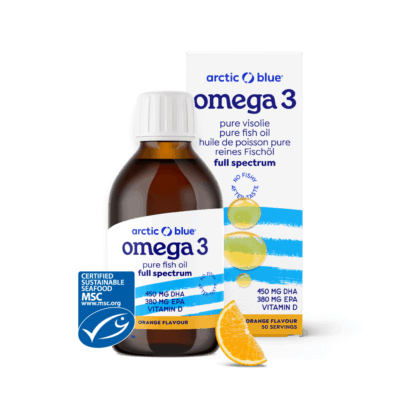
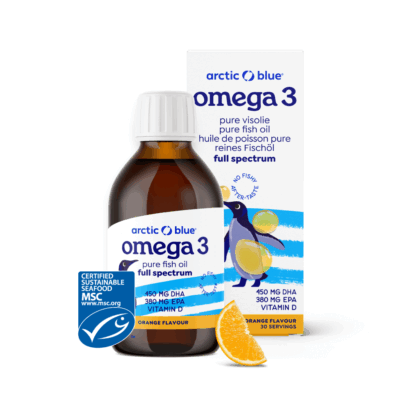
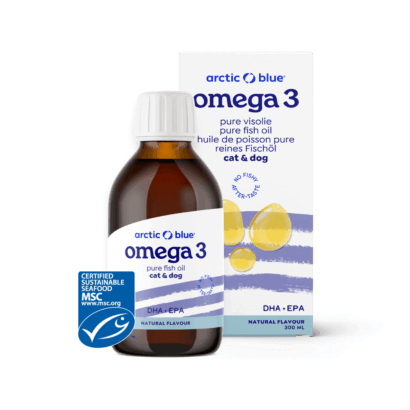
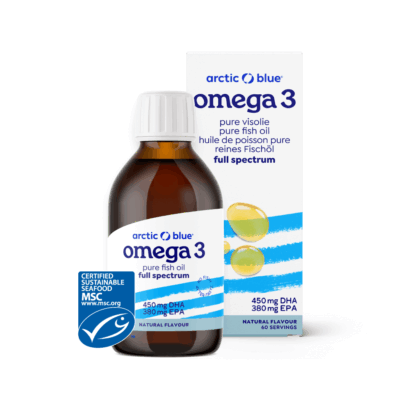
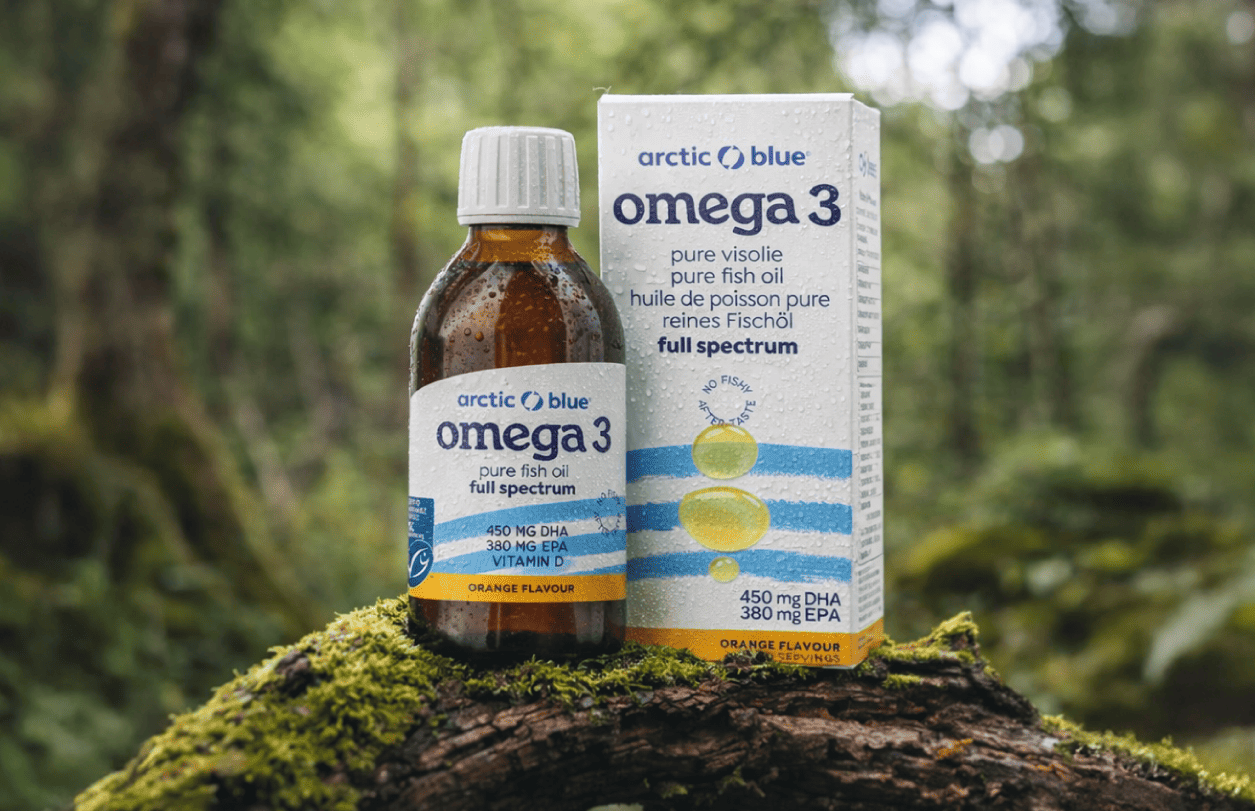
Both fish oil and algae oil are excellent sources of EPA and DHA. Fish oil comes from fatty fish
such as cod or anchovies. Algae oil is made from algae that produce omega-3 themselves.
Pay particular attention to quality: look for the MSC label on fish oil or the Vegan label on
algae oil. Good omega-3 does not smell or taste like fish—that is a sign that the oil is rancid
.
If you want to know more about which of the two is more suitable for you, read: Algae oil or fish oil, what is the difference? or use the product selector.

- Is omega-3 beneficial during pregnancy?
Yes, the fatty acid DHA from omega-3 is important during pregnancy and breastfeeding.
e intake of DHA by the mother contributes to the normal development of the
brain* and eyes* in the fetus and breastfed babies. Pregnant and
breastfeeding women need extra DHA: 200 mg per day on top of the
normal 250 mg of EPA and DHA.
For more information, read: Omega 3 during pregnancy: how to get enough
- Is it better to choose capsules or liquid oil?
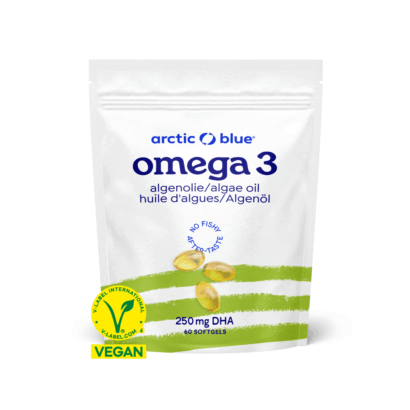
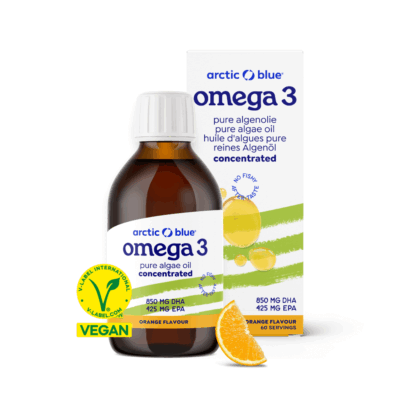
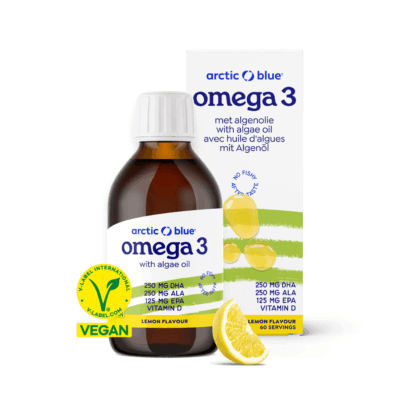
Whether you choose liquid oil or capsules has no effect on the effectiveness. Both forms contain the same omega-3 fatty acids and are of equal quality. The choice mainly depends on what you find most convenient to use.
Liquid oil is useful if you want flexible dosing or are taking larger amounts.
Capsules are easy to carry and have no distinct taste. So choose the form that best suits your routine to make it easier to stick to.
Frequently asked questions about Omega 3: Answered by Arctic Blue
After these 10 questions, you will hopefully know a lot more about omega-3. The bottom line is that omega-3 fatty acids are important for your heart, brain, and eyes. The basic rule is 250 mg of EPA and DHA per day. That may sound like a lot, but you can get that by eating fatty fish twice a week—your body will get what it needs for the whole week. If you prefer to take it daily, you can also do so by taking a supplement of pure fish oil or algae oil.
At Arctic Blue , we Arctic Blue it Arctic Blue important to provide reliable and understandable information about omega-3 so that you can make an informed choice. That is why we answer frequently asked questions based on existing nutritional guidelines and current knowledge about EPA and DHA, and why our articles are written by nutrition scientists. Would you like to know more about who we are and why we pay so much attention to information about omega-3? Read more about us and the story of Arctic Blue.
*Approved health claims from the EFSA: EPA and DHA contribute to normal heart function at a daily intake of 250 mg; DHA contributes to the
maintenance of normal brain function and normal vision at 250
mg per day; to maintain normal triglyceride levels, 2 g EPA+DHA per day
is required, and for blood pressure, 3 g per day; ALA is good for cholesterol at a daily
intake of 2 g; during pregnancy and breastfeeding, an additional intake of 200 mg
DHA (on top of 250 mg EPA+DHA) contributes to the normal development of the brain and eyes
of the fetus and infant; an intake of up to 5 g EPA+DHA per day is considered safe
.