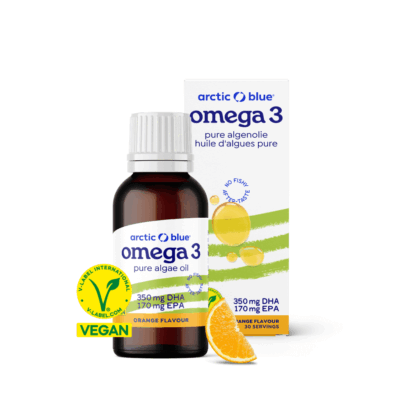
Algae oil or fish oil, what's the difference?
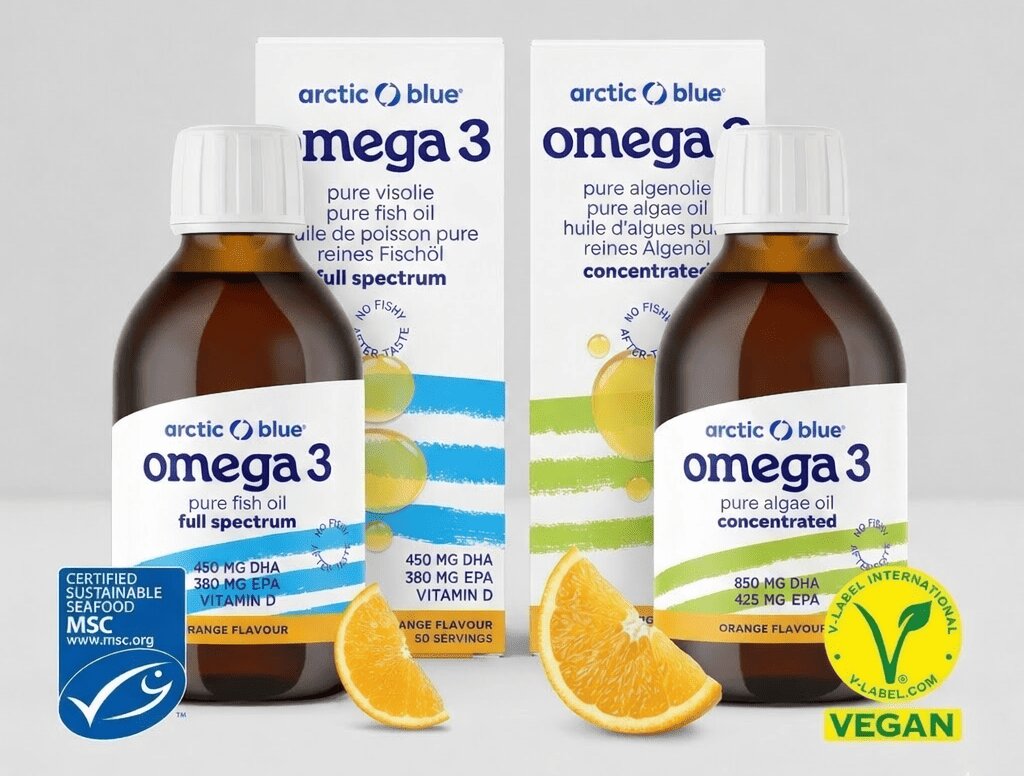
Algae oil vs. fish oil
Have you decided to include more omega-3 fatty acids in your diet? Good for you! But then you see two options: algae oil and fish oil. Which one should you choose? Both contain valuable omega-3 fatty acids EPA and DHA, but there are differences. In this blog, we'll tell you all about them.
Where does omega-3 come from naturally?
Omega-3 fatty acids such as EPA and DHA are not produced by fish themselves, but enter fish via the natural food chain. This chain works as follows:
1. Plant phytoplankton (microalgae) produce the first small amounts of omega-3.
2. Animal zooplankton eats these microalgae and therefore contains slightly more EPA and DHA.
3. Small fish eat plankton and thus build up higher concentrations of omega-3.
4. Larger fish species such as cod, herring, and sardines ultimately store most omega-3 in their fatty tissue.
Good to know:
The algae you see in the sea contain hardly any EPA or DHA. It is the fish higher up in the food chain that gradually build up these fatty acids in their tissues. That is why fish oil is naturally rich in a good profile of omega fatty acids, including omega-3.
So how does algae oil become a source of omega-3?
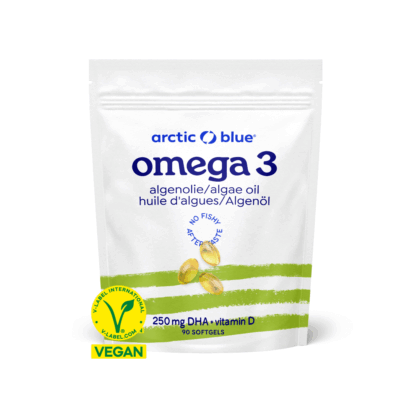
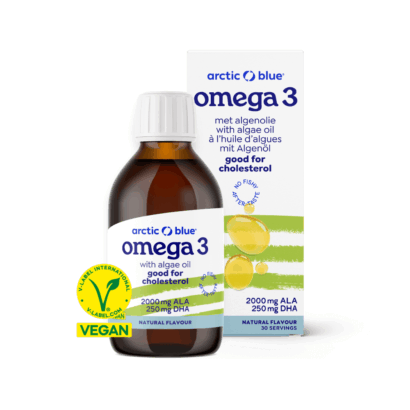
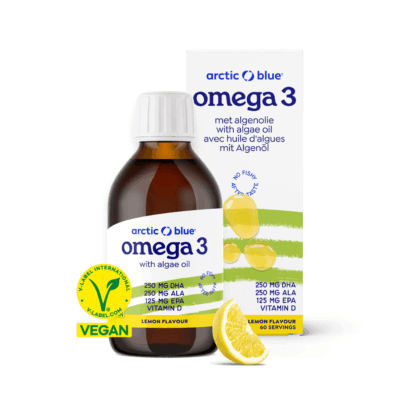
Years ago, scientists began selectively cultivating and breeding microalgae. One particular species emerged from this process: Schizochytrium. This algae can produce large amounts of DHA and sometimes also EPA. That is why virtually all algae oil worldwide is made from this species.
The algae are therefore not harvested from the sea, but cultivated in a controlled manner in stainless steel fermenters. This closed system ensures that the algae are free from contaminants.
Why do people choose algae oil?
- 100% plant-based and suitable for vegetarians and vegans
- No environmental influences
- Neutral taste (just like Arctic Blue )
- Our algae oil even has the highest concentration of EPA and DHA you can find.
- One disadvantage is that most algae oil products (in general) contain little or no EPA.
Algae oil is therefore a completely plant-based source of high-quality omega-3 fatty acids DHA (and usually EPA).
How does fish oil become a source of omega-3?
In nature, omega-3 is not produced in a fermentation culture system, but via a longer food chain:
plant plankton → animal plankton → small fish → larger fish
With each step, the fatty acids become more concentrated and their number increases. That is why natural (non-concentrated) fish oil naturally contains a full-spectrum omega-3 profile: not only EPA and DHA, but also omega-7, omega-9, omega-11, and a colorful collection of monounsaturated and polyunsaturated fatty acids, exactly as they occur in nature. In total, there are as many as 40 different fatty acids, the potential beneficial effects of which we do not even know yet.
This difference is clearly visible in Figure 1. Whereas algae oil mainly consists of omega-3 fatty acids and saturated fatty acids, and concentrated fish oil mainly focuses on a high concentration of EPA and DHA, natural, non-concentrated (Full Spectrum) fish oil retains the broad fatty acid profile that is naturally present in fish.
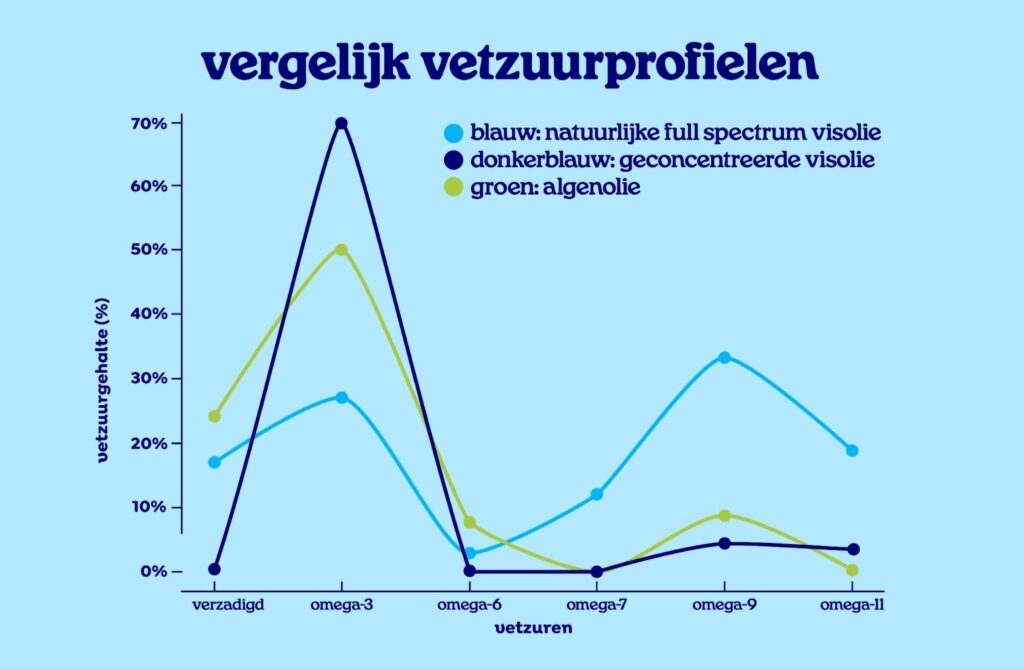
Figure 1: Comparison of fatty acid profiles: full spectrum fish oil, concentrated fish oil & algae oil.
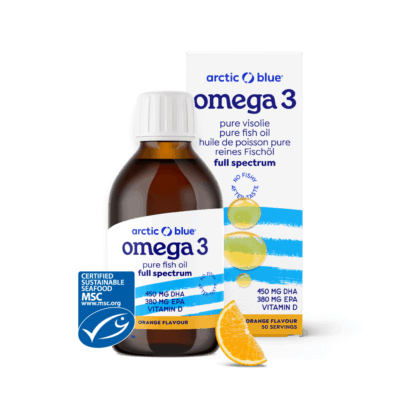
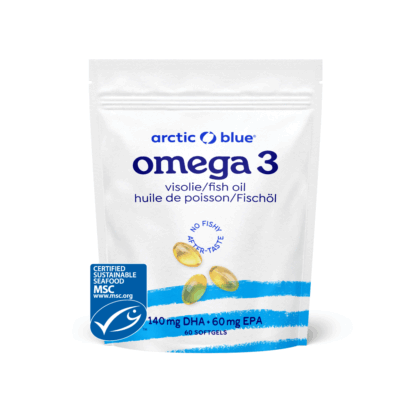
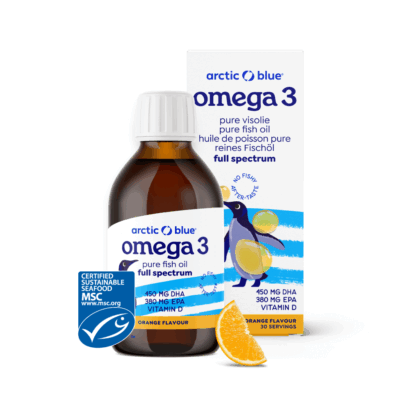
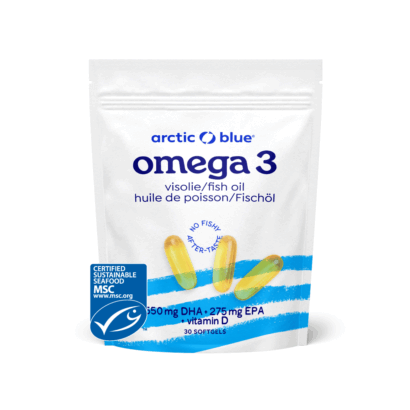
Why choose Arctic Blue ?
- Broad natural fatty acid profile – Our full spectrum fish oil provides a complete and natural fatty acid profile, with omega-3 fatty acids in their original balance as they occur naturally in fish.
- Clean oil sourced exclusively from Arctic seas, also suitable for children and pregnant women
- Fresh quality, without fishy taste, with a 100% no-burping guarantee.
- Made from fillet trimmings: no fish need be caught specifically for this purpose
- Always MSC certified.
The MSC label guarantees that the fish is wild-caught and that fish stocks and Arctic seas remain healthy. As you can see in Figure 2 below:
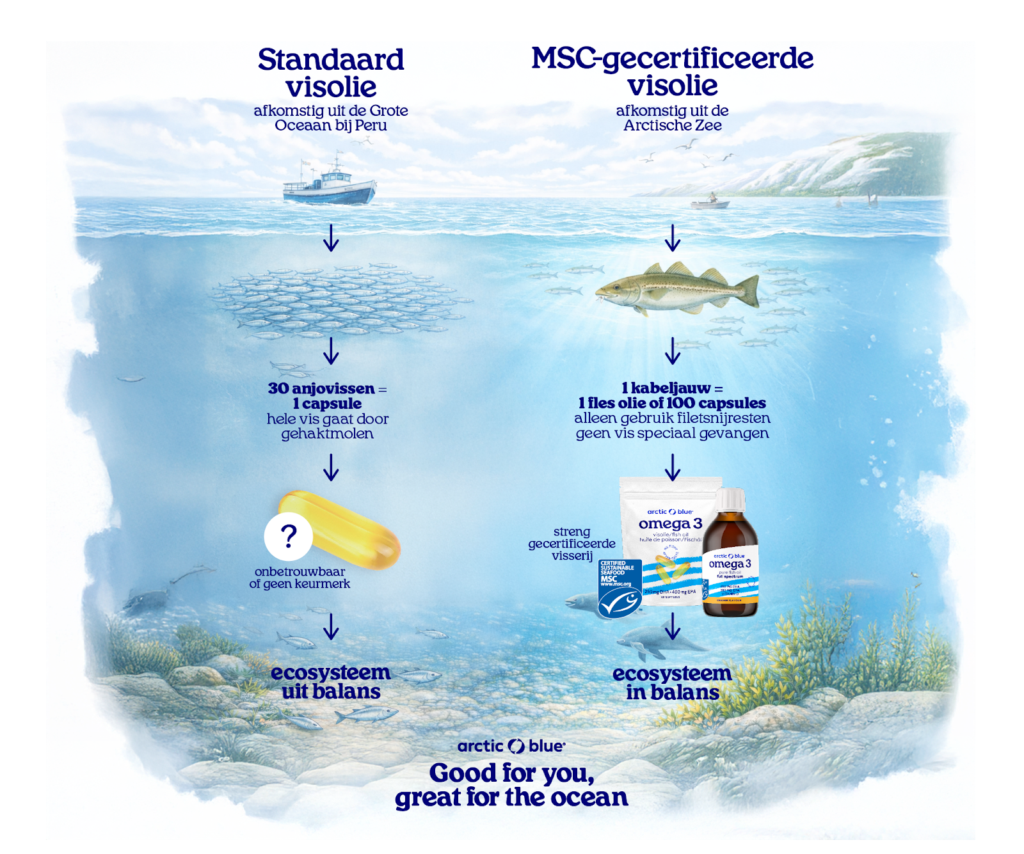
Figure 2: Read more about sustainability of Arctic Blue .
Conclusion: which is right for you—algae oil or fish oil?
As you can see in the image above, there is a big difference between standard fish oil and MSC-certified fish oil.
Arctic Blue and algae oil are both high-quality sources of omega-3. Both provide omega-3 DHA and EPA fatty acids. The main difference is in the fatty acid profile and the source (plant-based or fish). Both are sustainably produced, fresh (low oxidation), and of the highest quality. Try the product selector on our website to see which product suits you best.