Can omega-3 lower your cholesterol? Here are the facts

Do you have high cholesterol and wonder if omega-3 can help? Or are you just curious about exactly what omega-3 does for your cholesterol or lipid levels? In this blog, we’ll explain what omega-3 can and cannot do for your cholesterol. You’ll also get practical tips for maintaining healthy cholesterol levels and a balanced lipid profile.
What exactly is cholesterol?
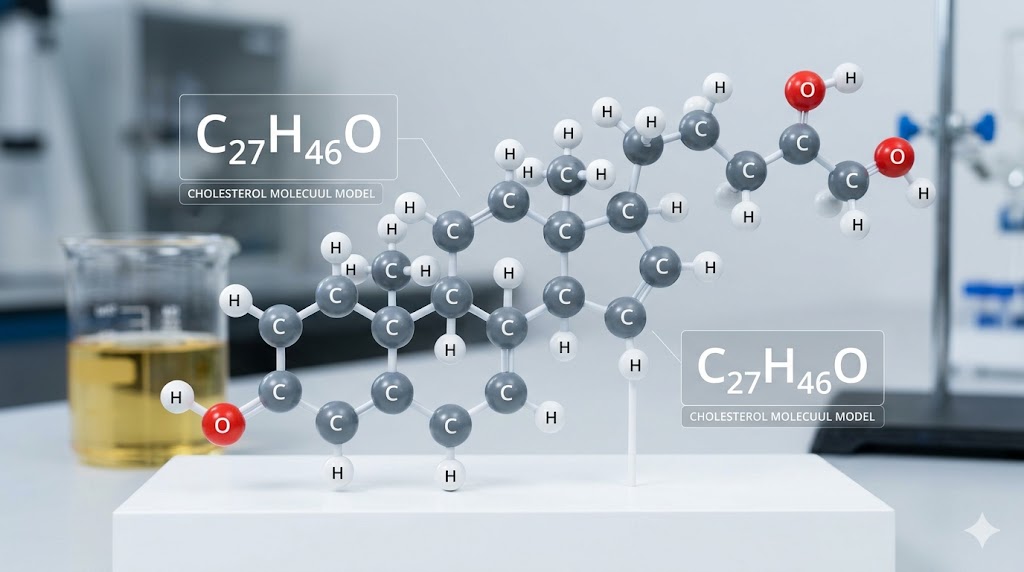
Before we look at omega-3, it’s helpful to understand what cholesterol is. Cholesterol is a waxy substance that your body produces on its own and that you also get from your diet. The relationship between cholesterol and diet is important: what you eat affects your lipid profile.
You need it for all sorts of processes, such as producing hormones and building cell walls. It only becomes a problem if you have too much of certain types of cholesterol in your blood. That can lead to health problems.
The difference between "good" and "bad" cholesterol
The two main types of cholesterol are HDL and LDL. You may have seen these terms during a cholesterol checkup.
LDL cholesterol
LDL transports cholesterol from the liver to your tissues. When your LDL cholesterol is too high, excess LDL cholesterol can build up in the artery walls. This can restrict blood flow. That is why high LDL levels are often referred to as "bad cholesterol."
HDL cholesterol
HDL does exactly the opposite. It helps transport excess cholesterol from your tissues and blood vessels back to the liver, where it is further processed. A higher HDL level is therefore considered beneficial for normal heart function and blood flow. HDL is also known as "good cholesterol."
| Feature | HDL (good cholesterol) | LDL (bad cholesterol) |
| Meaning | High-Density Lipoprotein | Low-Density Lipoprotein |
| Function | Transports excess cholesterol to the liver | Transports cholesterol to tissues |
| Effect on the body | Supports a healthy fat balance | Can accumulate in blood vessels |
| Effect on blood flow | Supports normal blood flow | May negatively affect blood flow |
| Health Profile | A higher value is beneficial | A value that is too high is undesirable |
Lowering cholesterol: what can you do on your own?
If you have high cholesterol or find out during a checkup that your cholesterol is slightly too high, many people look for ways to keep it under control.
Important to know: maintaining healthy cholesterol levels starts with your lifestyle.
Consider:
- adjust your diet
- get more exercise
- maintain a healthy weight
- Have your cholesterol checked regularly
A healthy diet supports a balanced fat metabolism and contributes to good blood circulation.

Does omega-3 lower cholesterol?
Yes, but it’s important to know that there are different types of omega-3 fatty acids. And they don’t all work the same way.
The three best-known are:
- ALA (alpha-linolenic acid)
- EPA (eicosapentaenoic acid)
- DHA (docosahexaenoic acid)
And when it comes to cholesterol, one of these three plays the leading role.
ALA: the omega-3 fatty acid for cholesterol
The only omega-3 fatty acid with a specific cholesterol claim is ALA (alpha-linolenic acid).
Alpha-linolenic acid (ALA) helps maintain normal blood cholesterol levels*.
The beneficial effect is obtained with a daily intake of 2 grams of ALA. ALA occurs naturally in plant-based sources such as flaxseed, chia seeds, and walnuts. Flaxseed oil is actually one of the richest natural sources of ALA, making it a great addition to a healthy diet.
And what about EPA and DHA?
EPA and DHA (from fish and algae) work in a different way.
They do not make a direct cholesterol claim, but:
- help maintain normal blood lipid levels*
- contribute to the normal functioning of the heart*
- help maintain normal blood pressure* (at higher doses)
This means that EPA and DHA do not specifically target cholesterol, but rather other components of your lipid profile. In this way, they help maintain a healthy lipid balance in the blood and contribute to normal heart function.
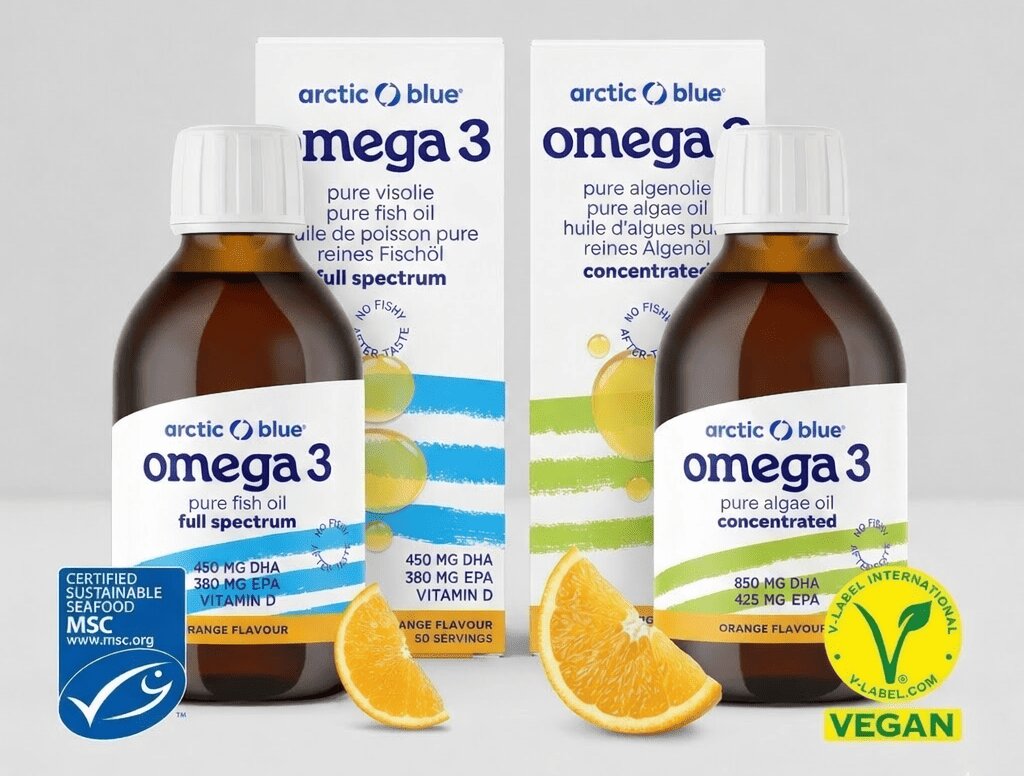
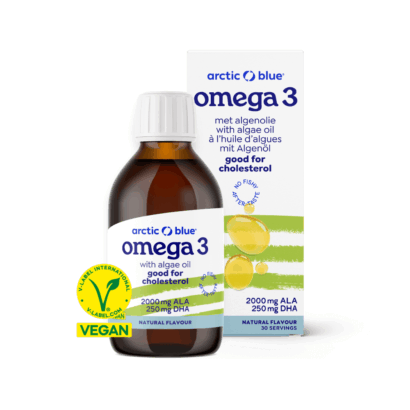
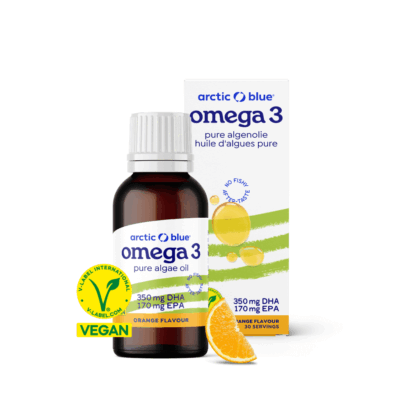
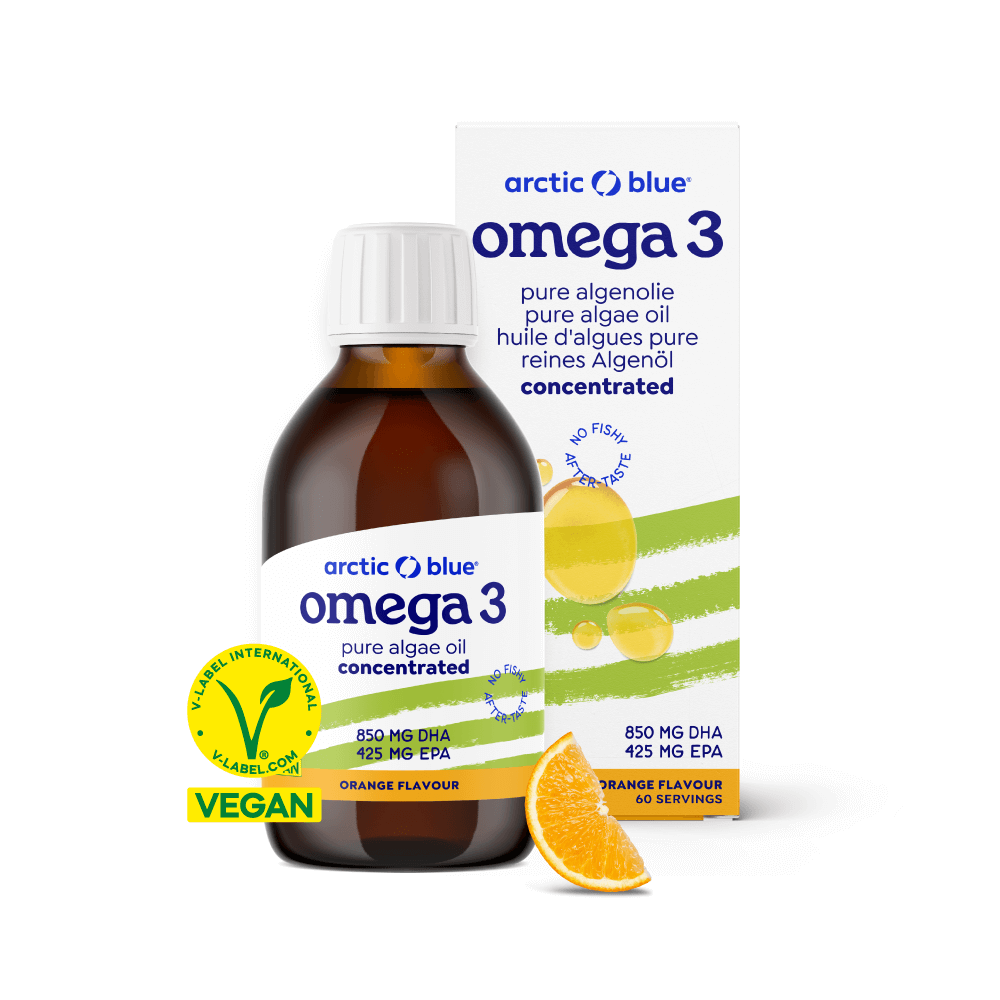
Thanks to this broader range of benefits, EPA and DHA make a valuable contribution to your overall fatty acid profile. At Arctic Blue to combine these beneficial fatty acids. We do this by blending flaxseed oil with algae oil in this product.
How can you maintain healthy cholesterol levels and improve blood flow?
Want to improve your cholesterol and triglyceride levels? It’s not just about omega-3—it’s about your overall diet and lifestyle. Follow these practical tips to ensure your body gets healthy fats:
- Eat fatty fish twice a week: choose fish such as salmon, mackerel, or herring. These are rich in natural omega-3 fatty acids, which help maintain normal blood lipid levels*. Not a fan of fish? Then you can also opt for a high-quality omega-3 supplement in the form of fish oil or algae oil.
- Add plant-based omega-3s: such as flaxseed, chia seeds, or walnuts. Flaxseed (and flaxseed oil) in particular is rich in ALA, the omega-3 fatty acid that’s good for cholesterol*.
- Eat nuts more often: a handful of unsalted nuts as a snack is much better than cookies or chips. Walnuts, almonds, and hazelnuts are packed with healthy fats.
- Get more exercise: this might just be the best tip! Exercise raises your HDL cholesterol (the "good" kind) and lowers your triglycerides. Even just a half-hour walk a day makes a huge difference. And it doesn't have to be perfect—any kind of exercise counts.
Limit processed foods: the more processed a product is, the more unhealthy fats it often contains. Opt for fresh ingredients more often and prepare your own meals. That way, you can control the types of fats you consume.
EPA and DHA: Supporting Your Lipid Profile and Heart Health
EPA and DHA (from fish and algae) work differently. These fatty acids are found in fish oil and algae oil, among other sources.
She:
- help maintain normal blood lipid levels*
- contribute to the normal functioning of the heart*
- help maintain normal blood pressure* (at higher doses)
Would you like to learn more about these fatty acids? Read more about EPA and DHA and their role in your body.
This means that EPA and DHA do not specifically target cholesterol, but they do contribute to a healthy fat balance and healthy blood.
Because of this broader support, they play a role in the overall picture of your lipid levels and general health.
Consistency is key to keeping cholesterol under control
You don't build a healthy lipid profile overnight. It's all about consistency in your diet and lifestyle.
If you choose to take omega-3 supplements, it’s important to continue taking them regularly to support your fat balance.
That’s why Arctic Blue also Arctic Blue an affordable subscription plan. This way, you’ll automatically receive your omega-3 products exactly when you need them, allowing you to consistently work toward maintaining healthy cholesterol levels.
In conclusion: Does omega-3 help lower cholesterol?
Omega-3 can be a valuable aid in managing your lipid profile, especially if you choose ALA.
ALA helps maintain normal blood cholesterol levels*.
EPA and DHA help maintain healthy blood lipid levels and support normal heart function*.
Together, these fatty acids help maintain a balanced fat profile and keep cholesterol in check as part of a healthy lifestyle.
Do you have any questions about omega-3? Check out our blog post on the 10 most frequently asked questions about omega-3
Omega-3 and Cholesterol: Arctic Blue's Perspective
At Arctic Blue , we look beyond a single fatty acid. For healthy cholesterol levels and a strong lipid profile, it’s the combination that matters.
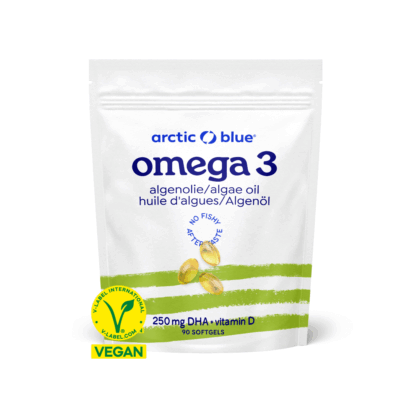
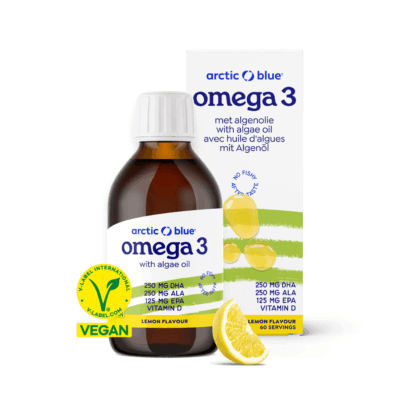
That’s why we combine plant-based ALA from flaxseed oil with EPA and DHA from algae oil. This way, you support not only your cholesterol levels but also your heart health and fat balance—all in one formula.
Our nutrition experts have carefully formulated this blend based on scientific insights and practical applicability. This way, you can be sure you’re using a product that fits into a healthy lifestyle.
Want to know which omega-3 supplement is best for you? Then use the product selector.
*Health claims approved by the EFSA. Health claims approved by the EFSA. The beneficial effects are obtained with a daily intake of 250 mg of EPA and DHA (for heart health), 2 grams of EPA and DHA (for triglyceride levels), 3 grams of EPA and DHA (for blood pressure), and 2 grams of ALA (for cholesterol).